Top 10 Types of Branded Paper Bags for Global Buyers?
Global buyers now evaluate branded paper bags beyond color, logo, and shelf appeal. Material choice, carrying strength, print quality, and end-of-life performance matter equally. A bag must survive a wet sidewalk, a crowded taxi, and repeated handling at checkout.
Eurostat reported that the European Union generated 186.5 kilograms of packaging waste per person in 2022. Paper and cardboard represented about 40% of that total. Smithers’ paper-based packaging market studies also identify fiber packaging as a continuing growth area, supported by retail branding and sustainability targets. However, growth does not automatically mean responsibility. A laminated bag with metallic film may look premium, yet recycling can become difficult.
Ellen MacArthur, a leading circular-economy expert, stated, “We need to rethink the way we make and use products.” That principle applies directly to branded paper bags. Buyers should examine recycled content, paper weight, handle construction, water-based inks, coatings, and supplier certifications. A 120-gram kraft bag may suit a bakery, while a reinforced 200-gram bag better supports footwear or cosmetics. Small details matter.
This guide reviews ten practical bag types for international purchasing teams. It compares kraft, recycled, luxury, flat-handle, twisted-handle, gusseted, and specialty formats. Dimensions, loading conditions, and storage humidity should shape every decision. Not every “eco” claim is complete. That deserves scrutiny. Reliable suppliers should provide test results, fiber documentation, and clear production specifications before large-scale orders.
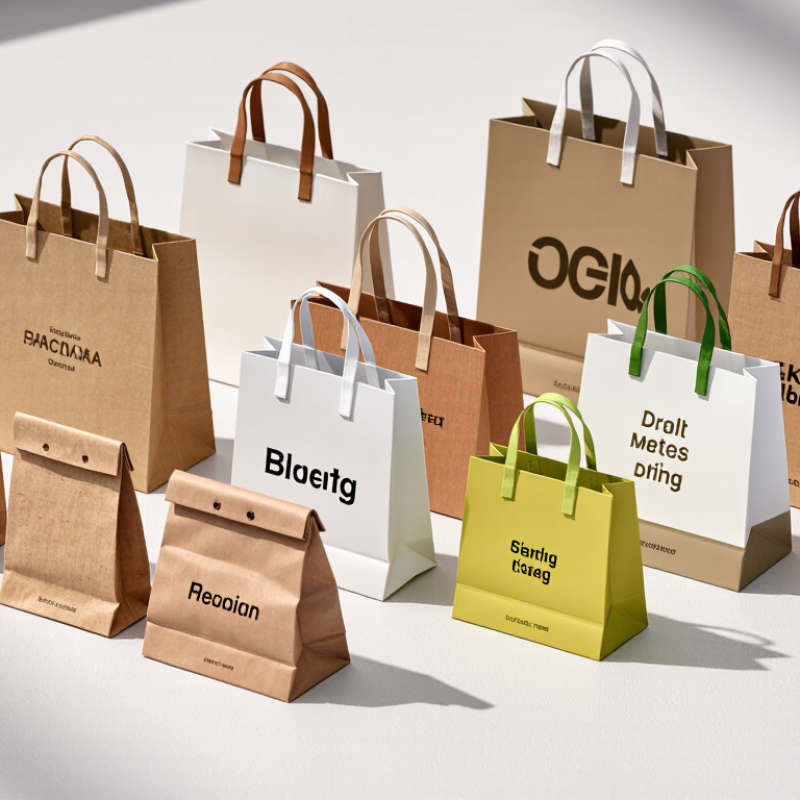
What Defines a Branded Paper Bag for Global Buyers
A branded paper bag is more than a printed logo on folded paper. For global buyers, it represents a controlled packaging system. The design should match the intended product, market, and customer experience. Paper weight, color accuracy, handle strength, and size all influence performance. A carefully made bag feels stable when carrying shoes, books, or boxed goods.
Material selection requires practical testing. Recycled paper can support sustainability goals, but its surface may absorb ink differently. Coated paper often gives sharper printing, yet it may affect recycling preferences. Claims about responsible sourcing should be supported by reliable documentation, not attractive wording alone. Buyers should request samples, inspect seams, and conduct simple load tests before approving production.
Details build trust.
A professional supplier should provide clear specifications, production tolerances, packaging methods, and delivery records. Printing must remain consistent across batches, especially when colors represent a visual identity. Handle attachment also deserves attention because weak fixing points can fail during normal use. We once saw a visually impressive bag perform poorly after repeated carrying. That experience showed why appearance cannot replace testing. A branded paper bag should also fit local recycling expectations and transport conditions. Humidity, stacking pressure, and long-distance shipping can change its final quality. The ideal design is not always the most decorative one. It is the one that remains useful, recognizable, and honestly documented.
Top 10 Branded Paper Bag Types by Design and Construction
Branded paper bags now compete through structure, not only printed graphics. Smithers’ The Future of Global Paper Packaging to 2029 identifies continued growth in paper-based packaging demand. FAO reported about 417 million tonnes of global paper and paperboard production in 2022. These figures support careful material selection, but they do not make every paper bag sustainable.
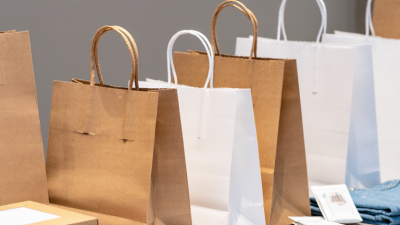
The ten leading types by design and construction are flat-handle bags, twisted-handle bags, rope-handle bags, die-cut handle bags, pinch-bottom bags, square-bottom bags, gusseted grocery bags, SOS self-opening bags, laminated paper bags, and rigid paper shopping bags. Flat handles suit lightweight retail items. Twisted handles offer a familiar, economical build. Rope handles add comfort and a premium touch. Die-cut handles reduce components but can weaken under heavy loads. Pinch-bottom bags fit quick-service packaging. Square bottoms stand securely on counters. Gusseted bags expand for boxed products. SOS bags open quickly and stack efficiently. Laminated bags resist moisture better. Rigid bags provide stronger shape retention.
Construction details matter. A 120–170 gsm kraft body may suit clothing, while heavier stock supports bottles or giftware. Recycled content can reduce virgin fiber use, yet weak fibers may lower tear resistance. Water-based coatings are useful, but they still complicate recycling in some systems. This is where specifications often become imperfect. Buyers should test filled bags, handles, seams, humidity exposure, and transport vibration before approving production. Industry reports guide decisions; real samples reveal the flaws.
Material, Handle, Size, and Printing Options
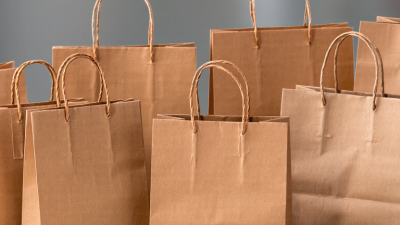
Branded paper bags differ most in material, not artwork. Kraft paper gives a natural, sturdy feel and suits groceries, boutiques, and takeaway orders. Recycled kraft reduces virgin fiber use, but its surface may show flecks and absorb ink unevenly. Coated paper creates sharper colors and smoother photos, although it can weaken the bag’s recyclable profile. Ask suppliers for GSM, paper source, burst strength, and sample photos before approving a bulk order. Specifications matter more than attractive mockups.
Handle choice changes comfort and load performance. Twisted paper handles fit everyday retail bags, while flat paper handles feel cleaner for lighter products. Cotton or cord handles add a premium touch, but they increase cost and may complicate recycling. For size, measure the packed product, not just the product itself. Allow room for tissue, folded edges, and hand clearance. Small bags suit accessories; medium bags fit boxed goods; wide gussets carry shoes, food containers, or several items. A bag that looks elegant may still tip over.
Printing should match the paper and the buying environment. Flexographic printing is practical for simple designs and larger quantities. Offset or digital printing handles detailed graphics, short runs, and color testing more effectively. Use one or two ink colors when budget and recycling goals matter. Check print alignment, handle attachment, crease strength, odor, and local packaging requirements during inspection. A supplier sample can look perfect before tissue paper changes the fit. That small oversight can alter the final specification.
Choosing the Right Paper Bag for Different Industries
Top 10 Types of Branded Paper Bags for Global Buyers
Choosing the right bag starts with the industry, not the artwork. Retail stores often use twisted-handle, flat-handle, and die-cut bags for clothing, gifts, and daily purchases. Supermarkets usually need strong SOS, block-bottom, or pinch-bottom bags. These designs stand upright and carry heavier products. Bakeries benefit from grease-resistant satchel bags, while restaurants may prefer flat paper bags with secure folding tops. Wine shops often choose reinforced bottle bags. Premium retailers may select rope-handle or rigid paper bags for a stronger presentation.
Smithers’ The Future of Paper Packaging to 2028 estimates the global paper packaging market will reach about US$503 billion by 2028. This growth reflects demand for practical, fiber-based packaging. However, material selection still needs care. CEPI reported an 82.5% paper recycling rate in Europe for 2023, but coatings, wet strength additives, and mixed handles can affect recovery. Recyclable does not always mean easily recyclable.
For food contact, buyers should verify grease resistance, ink migration control, and documented compliance for the target market. A paper bag for fresh bread needs different protection from one carrying cosmetics. Handle size, paper grammage, gusset depth, and moisture exposure should be tested together. In real purchasing work, attractive bags sometimes fail at the bottom seam. That lesson is easy to ignore. Small pilot orders, drop tests, and packed-weight checks can prevent expensive mistakes. Supplier certificates also deserve scrutiny, because a logo or claim alone proves little.
Global Buying Standards, Customization, and Sustainability Factors
Top 10 Types of Branded Paper Bags for Global Buyers
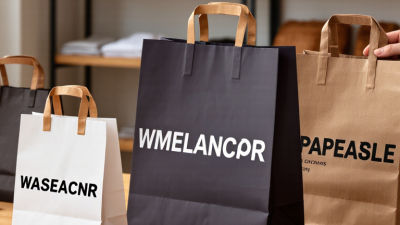
Global buyers usually compare ten formats: flat-handle, twisted-handle, rope-handle, SOS, pinch-bottom, wine, bakery, takeaway, luxury rigid, and recycled kraft bags. Each serves a different purchasing need. Flat handles suit retail counters, while SOS bags stand securely during transport. Wine bags need stronger bases. Bakery bags require food-contact suitability and clean internal surfaces. These details affect performance more than decoration.
Customization should begin with measurable standards. Specify paper weight, handle strength, dimensions, moisture resistance, print color tolerance, and packing quantity. ISO 18606 provides guidance for organic recycling claims, but certification evidence still requires verification. The Sustainable Packaging Coalition’s reports emphasize material reduction, recovery systems, and clear end-of-life communication. A glossy laminated bag may look premium, yet its mixed materials can complicate recycling. That trade-off deserves honest review.
Sustainability claims need data. The OECD’s Global Plastics Outlook reported 353 million tonnes of plastic waste in 2019, with packaging among the largest applications. Paper bags can reduce fossil-based material use, but they are not automatically low-impact. Forest sourcing, recycled content, production energy, transport weight, and reuse frequency all matter. Smithers’ The Future of Sustainable Packaging to 2028 identifies continued growth in sustainable packaging demand, increasing buyer pressure for documented performance. My practical concern is simple: buyers often request “eco-friendly” bags without defining the end market. Start there. Evidence beats slogans.
Top 10 Types of Branded Paper Bags for Global Buyers
Typical paper basis weight by bag type — a practical indicator of durability, customization potential, and material use
Values show representative midpoints of commonly specified commercial paper weights. Lower-GSM bags are generally suited to lightweight retail or food applications, while higher-GSM formats support luxury presentation, rigid construction, and heavier products. Final specifications should be confirmed against load capacity, paper certification, printing method, handle design, and destination-market packaging requirements.