Back to top

Why Choose Kraft Shopping Bags for Your Business?

Why Choose Kraft Shopping Bags for Your Business?

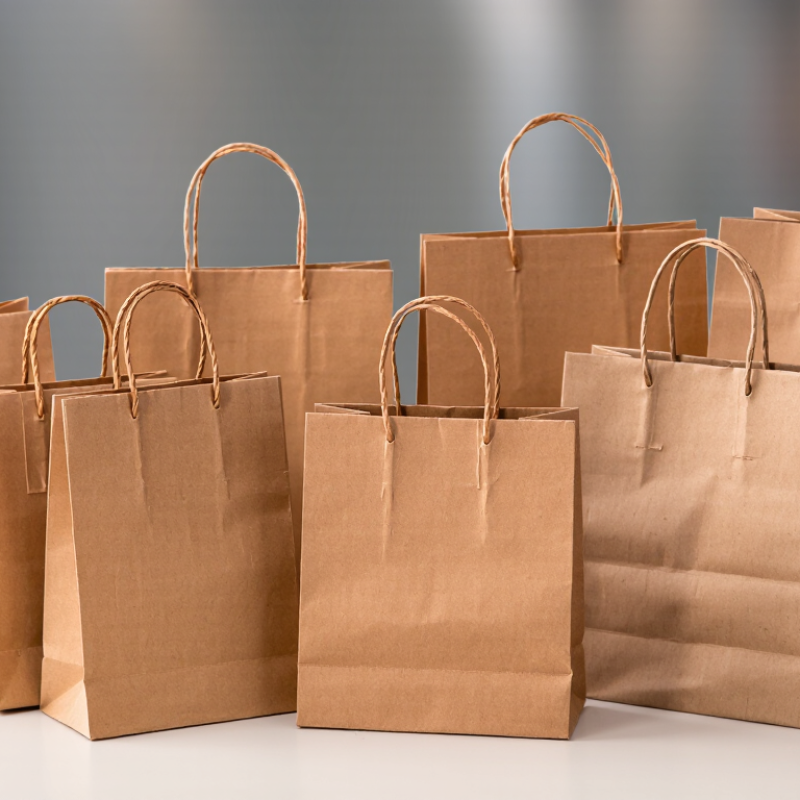
A shopping bag is more than a carrier. It leaves your store, travels through busy streets, and remains visible in a customer’s hands. Kraft shopping bags can turn that everyday moment into quiet brand exposure. Their warm brown surface, strong paper handles, and natural texture often communicate simplicity and practical value.

Circular-economy pioneer Walter R. Stahel captures the underlying principle: “Waste is a resource in the wrong place.” This idea helps explain why many businesses consider kraft paper for retail packaging. Kraft shopping bags can be made from renewable fibre, printed with water-based inks, and recycled through suitable paper-recovery systems. However, responsible packaging is not automatically sustainable. Material sourcing, bag weight, coatings, transport distance, and local recycling access all matter.

The customer notices details.

A thick base prevents awkward spills. Reinforced handles feel safer with a glass jar or folded sweater inside. A clean logo can make a small purchase feel considered. These practical details support customer experience, while the recyclable paper format may strengthen a brand’s environmental message.

Still, kraft shopping bags are not perfect. They can weaken when exposed to rain, and oversized bags may waste material. Businesses should match bag dimensions to real products, not assumptions. Testing handle strength and reviewing supplier certifications can prevent avoidable disappointment.

For retailers seeking functional, customizable, and visually honest packaging, kraft shopping bags offer a balanced option. Their value comes from thoughtful use, not from green claims alone.
Why Choose Kraft Shopping Bags for Your Business?

What Are Kraft Shopping Bags?

Why Choose Kraft Shopping Bags for Your Business?

What Are Kraft Shopping Bags?

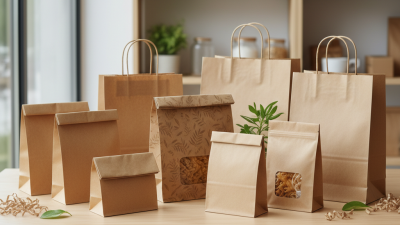
Kraft shopping bags are paper carriers made from kraft paper. The kraft process strengthens wood fibers during paper production. This gives the material useful tear resistance and a natural brown appearance. Some bags are bleached white, while others retain their original kraft color. Their paper handles may be twisted, flat, or reinforced with folded edges.

In daily retail use, kraft bags feel light but dependable. They hold clothing, books, bakery boxes, and many dry goods. The paper surface also accepts stamps, labels, and simple printed designs. However, they are not waterproof. A damp sidewalk can quickly weaken the bottom. Recycled content, thickness, and handle quality also differ between suppliers. Check the product specification instead of trusting the word “kraft” alone. This small step prevents disappointing results.

Tips: Match the bag size to the item. A tight fit can strain the handles. For heavier products, choose a wider base and stronger paper. Store unused bags away from moisture and direct sunlight. Test a sample before ordering large quantities. It may feel unnecessary, but real handling reveals weak folds and awkward handles.

How Are Kraft Shopping Bags Made?

Kraft shopping bags begin with wood fibers, often from responsibly managed forests or recycled paper. The kraft process turns these fibers into strong pulp through heat, water, and controlled chemicals. The pulp is washed, refined, and spread across a moving screen. Water drains away, leaving a wet fiber mat. Large rollers press it flat before heated cylinders dry the paper into smooth kraft sheets.

Manufacturers then cut the sheets into panels and fold them along precise lines. Glue secures the side seams and bottom folds. Handles may use twisted paper cords, flat paper strips, or reinforced patches. Printing usually happens before final assembly. Water-based inks can create clear designs while limiting harsh odors. Quality checks examine weight, seam strength, handle attachment, and moisture resistance. A useful lesson is that thicker paper does not always make a better bag. Poor folding can still cause failure.

Tips: Match the paper weight to the product. Test the filled bag for several minutes. Check the bottom after setting it on a damp surface. Small defects matter. A slightly uneven handle may seem harmless, but it can make carrying uncomfortable. Kraft bags are practical, yet production still uses energy, water, and raw materials. Recycled content can reduce some impacts, although it may sometimes lower strength. Careful material choices and realistic testing usually produce a more reliable result.

What Benefits Do Kraft Shopping Bags Offer Businesses?

Kraft shopping bags give businesses a practical way to improve everyday customer experiences. Their warm brown surface creates a natural, approachable appearance without excessive decoration. In a busy shop, sturdy paper handles feel comfortable during a short walk home. Customers can also reuse the bags for books, lunch containers, or small household items. They feel honest. That small experience may support positive memories of the store.

The practical benefits extend beyond appearance. Kraft paper is lightweight, which can reduce storage pressure behind a counter. A bakery can use smaller bags for boxed pastries, while a clothing shop may choose wider formats with reinforced bases. Flat handles save space when bags are stacked. Businesses can also print useful details, such as care instructions, contact information, or a short message about responsible material use. A reliable supplier should provide clear information about paper weight, recycled content, handle strength, and production standards. These details help purchasing teams compare products professionally rather than choosing by color alone.

Kraft bags are not perfect. They weaken when exposed to rain, oil, or excessive weight. Heavy items need stronger packaging or additional protection. Printing may also affect recyclability when coatings are added unnecessarily. From practical experience, testing one filled bag before a large order can reveal weak seams and uncomfortable handles. The first design may need revision. A slightly wider base, shorter handle, or thicker paper can make daily use more dependable.

How Can Businesses Customize Kraft Shopping Bags?

Why Choose Kraft Shopping Bags for Your Business?

How Can Businesses Customize Kraft Shopping Bags?

Customization starts with the customer’s hand, not the artwork. Measure the product, then choose the bag’s width, height, gusset, and paper weight. A bakery box needs a wider base. A bottle needs stronger side seams. Twisted paper handles feel comfortable, while flat handles reduce material use. Small details matter.

Printing can match a store’s colors, but excessive ink may weaken a sustainability message. Simple one-color graphics often look clearer on natural kraft paper. Businesses can add logos, product instructions, seasonal artwork, QR codes, or short brand stories. A matte finish can improve appearance, yet coatings may affect recyclability. Always confirm the coating with the converter.

The U.S. Environmental Protection Agency reported a 68.2% recycling rate for paper and paperboard in its 2018 Facts and Figures report. That figure supports kraft’s practical appeal, but clean fiber is not guaranteed to be recycled everywhere. Local collection rules still matter. According to Smithers’ industry outlook, sustainable packaging demand continues expanding across retail markets. However, customization should not become decoration without purpose. In production testing, a beautiful mock-up can fail when handles tear or dark ink disappears across folded seams. Request samples, test realistic loads, and inspect the bag after repeated handling. Small mistakes remain possible. Good specifications reduce them.

Why Choose Kraft Shopping Bags for Your Business? - How Can Businesses Customize Kraft Shopping Bags?
Data Dimension Typical Kraft Bag Information Business Benefit Customization Possibilities
Paper Material Made from kraft paper produced from wood pulp. Brown kraft paper retains its natural fiber appearance, while bleached kraft paper provides a lighter print surface. Creates a natural, practical appearance and supports a consistent packaging identity. Choose brown or white paper, virgin or recycled content where available, and different surface finishes.
Paper Weight Common shopping-bag paper weights are approximately 70–120 g/m². Heavier paper generally provides greater stiffness and tear resistance. Allows businesses to balance appearance, durability, and material consumption. Select the paper weight according to product weight, bag size, handle type, and expected reuse.
Bag Structure Typical formats include flat-bottom paper bags and twisted-handle bags. A reinforced base can improve stability and load distribution. Improves product presentation and helps the bag stand more securely during carrying and display. Customize width, gusset depth, height, base reinforcement, and opening style.
Handle Options Common options include twisted paper handles, flat paper handles, cotton or textile handles, and die-cut handles. A suitable handle can improve carrying comfort and reinforce the intended price and quality level. Choose handle material, color, length, attachment method, and handle reinforcement.
Printing Coverage Printing may be applied to one or both sides, with coverage ranging from a small logo area to full-surface artwork. Turns the bag into a visible packaging and customer-recognition tool. Specify print sides, artwork size, background coverage, color quantity, and registration requirements.
Printing Methods Flexographic printing is commonly used for repeated designs and larger runs; digital printing is suitable for shorter runs or variable artwork. Provides flexibility in balancing print quality, production volume, and setup requirements. Select the process based on quantity, artwork complexity, color requirements, and deadline.
Size Selection Bag dimensions are normally specified as width × gusset × height. Small sizes suit accessories, while larger sizes suit folded garments, boxed goods, and takeaway items. Reduces excess material and helps products fit securely without unnecessary movement. Create multiple sizes for different product categories or use a custom dimension for a specific package.
Load Capacity Load performance depends on paper weight, bag dimensions, base construction, handle attachment, and product shape. It should be verified through product-specific testing. Helps prevent handle failure, base damage, and product loss during normal use. Adjust paper weight, reinforcement, handle type, and dimensions after practical load testing.
Surface Finish Available finishes may include uncoated, matte, glossy, or protective coatings. Coatings can affect recyclability and should be assessed with local recycling requirements. Improves visual appeal or offers additional protection against light scuffing and moisture exposure. Choose texture, gloss level, coating type, and whether a coated or uncoated surface is more appropriate.
Environmental Profile Paper bags are fiber-based and can be recyclable where suitable collection systems accept them. Recyclability depends on coatings, laminations, inks, adhesives, and local facilities. Supports packaging strategies that prioritize renewable fiber materials and responsible end-of-life planning. Use recyclable construction where possible, request recycled content documentation, and avoid unnecessary laminations.
Order Planning Custom production usually requires artwork approval, sampling, minimum order quantities, and lead-time planning. Exact requirements vary by specification and supplier. Helps control inventory, reduce urgent reorders, and keep packaging consistent across sales channels. Define quantity by size, delivery schedule, artwork version, packaging method, and quality-control checkpoints.

Note: Specifications such as strength, recyclability, print performance, and available customization depend on the final bag design, materials, manufacturing process, and local recycling infrastructure.

What Should Businesses Consider Before Choosing Kraft Shopping Bags?

When choosing kraft shopping bags, businesses should begin with the product, not the paper’s attractive brown appearance. A small bakery may need grease-resistant bags, while a clothing shop may prefer a cleaner finish and stronger handles. Test each bag with the heaviest realistic purchase. Then carry it across a car park. This simple trial reveals weak seams, handle stretching, and awkward sizing. Real use matters.

Paper weight, handle construction, dimensions, and moisture resistance all affect performance. Thicker paper can improve durability, but it also increases material use and shipping weight. Twisted handles feel comfortable, while flat handles may suit lighter items. Ask suppliers for recycled-content details, production specifications, and test data. Avoid relying on vague environmental language. If bags touch food, confirm material and ink suitability. Check local requirements carefully. Claims need evidence.

Businesses should calculate storage space, delivery timing, and the cost of damaged products. A low unit price may hide frequent replacements or oversized packaging. Print quality also deserves attention. Dark ink can appear uneven on porous kraft paper. Request a physical sample before approving a large order. Some bags look excellent in photographs but feel flimsy in hand. That mistake is easy to make. Reconsider the bag size, too, because excessive empty space wastes material and weakens the customer experience.

X