Global buyers rarely choose a paper bag for appearance alone. They examine strength, print quality, material consistency, and delivery reliability. This guide introduces the top 10 types of custom kraft paper bags for retail, food service, events, and product packaging. Each type solves a different problem. A flat-handle bag suits takeaway counters, while a twisted-handle bag feels stronger in boutiques. A gusseted design creates room for boxed products. A windowed bag helps customers see coffee, bread, or gift items before opening.
Lisa McTigue Pierce, a respected packaging writer, has described packaging as “the silent salesman.” That idea matters here. A well-designed bag communicates brand color, product value, and practical care before a customer speaks with your company. Buyers should compare kraft paper weight, handle attachment, base construction, ink coverage, and moisture resistance. Food-related applications also require suitable materials and documented supplier controls. Local packaging rules still matter.
Not every attractive bag performs well. A glossy finish may weaken recyclability goals. A thin paper can tear beside a heavy bottle. Even a strong bag may arrive with uneven printing or poorly aligned handles. These details deserve honest attention. The following overview considers common bag structures, use cases, customization options, and sourcing questions. It is not a perfect formula. Buyer experience, product weight, shipping conditions, and regional requirements can change the best choice. That is why practical testing remains essential before a large order.
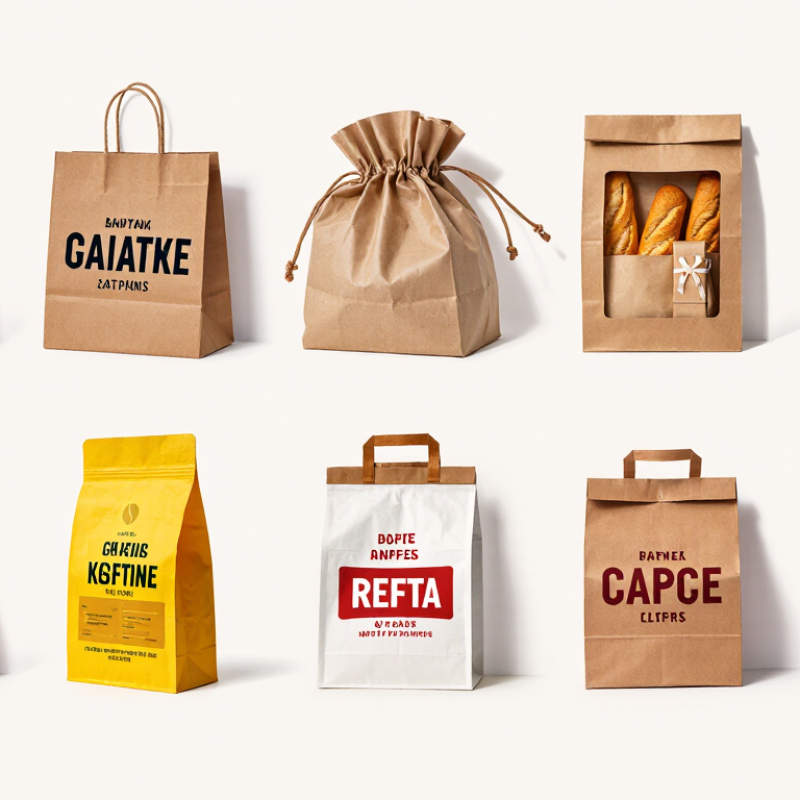
Custom kraft bags differ mainly in structure, carrying method, and intended use. Flat paper bags suit bakeries, takeaway counters, and lightweight retail goods. SOS bags stand upright without handles, making them practical for groceries and quick packing. Square-bottom bags offer stronger stability for boxed products. Pinch-bottom bags close neatly and work well for bread, grains, and dry goods. Gusseted bags expand at the sides, creating useful space for bulky items.
Handle styles create another clear classification. Twisted-handle bags provide a comfortable grip for clothing, gifts, and daily retail purchases. Flat-handle bags usually offer a clean appearance and efficient stacking. Loop-handle bags feel more flexible for repeated carrying. Bottle bags include reinforced bases and narrow compartments, helping protect glass containers during transport. Window bags expose the product, which benefits cafés, gift shops, and specialty food sellers. The window material still needs careful testing for clarity and sealing.
In production reviews, I check paper weight, handle attachment, bottom strength, and print alignment. A bag may look attractive but fail when packed with uneven products. Humidity can also soften kraft paper during storage or shipping. Buyers should request samples with the actual load, dimensions, and closure method. Food-related applications require suitable materials and documented compliance for the destination market. One detail is often missed: a thicker bag is not always a better bag. It can increase cost, shipping weight, and material use without improving performance.
Flat, SOS, and pinch-bottom kraft paper bags remain practical lightweight formats for global buyers. At 60–100 gsm, they reduce material use and shipping weight without feeling overly fragile. However, paper grade alone does not decide performance.
Flat bags suit documents, bread, and slim retail items. Their simple shape stacks efficiently and prints cleanly. SOS bags open into a square base, giving better volume for groceries, snacks, and takeaway products. Pinch-bottom bags have folded closures that help hold narrow or irregular contents. They often feel more secure in hand, though their production details need closer checking.
Small differences matter. A 70 gsm bag may work well for dry goods, but humidity can weaken it quickly. I recommend testing filled samples, handles, seams, and bottom folds under realistic conditions. Do not test only in a clean warehouse. Try cold storage, repeated lifting, and uneven loading. That reveals problems earlier. A buyer should also confirm paper origin, recycled content, sizing tolerance, and print resistance with the supplier. These details support traceability and consistent purchasing.
Lightweight is not automatically better. A thinner bag may reduce cost, yet create more complaints during transport. In my experience, the correct choice depends on product weight, moisture exposure, opening style, and stacking needs. Sometimes, buyers select 60 gsm too quickly. That decision deserves a second look.
Block-bottom, satchel, and bakery bags serve different food-packing routines. Their performance depends on product weight, moisture, filling speed, and storage conditions.
Block-bottom bags usually stand upright on counters and packing lines. They suit flour, grains, snacks, and takeaway foods. Paper from 90 to 120 gsm offers better shape retention for heavier contents. A flat base also improves shelf presentation. However, oversized bags can split at the corners when filled too quickly. Sample testing matters.
Satchel bags use less material and fold neatly during transport. The 70–90 gsm range works well for sandwiches, pastries, and dry snacks. Bakery bags often include a glassine or clear window for product visibility. The paper should resist light grease without weakening after contact. During sampling, I have found that a beautiful print cannot fix poor seam strength. Small details matter.
For global buyers, confirm food-contact documentation, ink suitability, and migration-test requirements before production. Rules differ between destination markets. Humidity testing is also useful, especially for sea shipments. A bag that performs well in a dry warehouse may soften inside a damp container. I would not choose the lowest gsm automatically. Cost savings can disappear through returns, damaged products, or slower packing.
Custom kraft paper bags now serve more than basic takeaway needs. Retail buyers choose handled, windowed, and gift formats for different shopping moments.
In 80–200 gsm paper, weight changes the bag’s feel, strength, and print performance. An 80 gsm bag suits lightweight bakery items or small accessories. A 200 gsm structure feels firmer for ceramics, books, and premium gifts.
The Food and Agriculture Organization reported global paper and paperboard production near 417 million tonnes in 2021. That scale shows the material’s importance, but not every paper bag is automatically sustainable.
Handled bags remain practical for boutiques, food counters, and event retail. Twisted paper handles improve comfort, while flat handles reduce material and storage volume. Windowed bags display cookies, soaps, or handmade goods without opening the package. However, a large window can weaken the front panel.
Gift bags often use 150–200 gsm kraft paper, folded gussets, reinforced rims, and cotton or paper cords. A 2024 packaging outlook from Smithers identified rising demand for recyclable fiber formats, yet it also noted performance challenges around moisture and barrier protection. My own packaging trials suggest that buyers sometimes over-specify paper weight. Heavier is not always better.
Tips: Match gsm to product weight, handle length, and transport distance. Test filled bags for 24 hours. Check the window seal, fold lines, and base before approval. Ask for recycled-fiber content and responsible forestry documentation. Keep ink coverage moderate; dense dark areas can make kraft surfaces look uneven. Small defects become visible under strong retail lighting.
Mailer bags are a practical choice among custom kraft paper bags for global e-commerce shipments. They suit products weighing roughly 3–10 kg, including clothing, books, and household goods. Their flat shape saves warehouse space and reduces unnecessary outer packaging. A reinforced paper handle is useful for lighter loads, but it may not suit heavier parcels. Load testing matters.
Tips: Ask for burst strength, tear resistance, and seam-test results before placing a large order. Confirm the finished bag size, not only the paper size. Add an inner barrier when products may face moisture during transit. Keep printed areas clear of opening folds. Small details prevent expensive rework.
FSC paper sourcing should be documented, not treated as a marketing phrase. Request current certification information from the paper supplier and check whether the material supports the required chain of custody.
Recycled content can reduce virgin fiber use, but it may affect stiffness, color, and print quality. A realistic specification balances these factors.
In my experience, a strong first sample can still fail after filling, stacking, or rough handling. That is why buyers should test filled bags under warehouse and delivery conditions. Even then, results are not perfect. Review the design after early shipments and adjust the paper grade, closure, or dimensions when evidence supports a change.