Top 10 Hot Melt Coating Machine Manufacturers Worldwide
Choosing among the Top 10 Hot Melt Coating Machine Manufacturers Worldwide requires more than comparing brochures. A reliable evaluation examines engineering experience, production consistency, material compatibility, and after-sales support. These machines apply adhesive without solvent evaporation, making process control especially important. Small differences in coat weight can affect bonding strength, appearance, waste, and operating cost. That is why this guide focuses on evidence, not impressive claims.
The selected manufacturers are assessed through public technical information, industry reputation, application range, and service capability. Relevant details include coating width, line speed, temperature control, pump design, substrate handling, and safety systems. A packaging converter may value rapid changeovers, while a medical materials producer may require tighter cleanliness controls. Battery, label, textile, and construction applications also demand different machine configurations. Real factory conditions matter. A machine that performs well in a demonstration may need adjustment on a demanding production line.
This overview aims to help engineers, procurement teams, and business owners create a practical shortlist. It does not treat company size as proof of superior performance. Installation support, spare-parts access, operator training, and documented testing can be equally decisive. Readers should verify current specifications directly with each manufacturer before making a purchase. Markets change, and published data can become outdated. Some comparisons remain imperfect because suppliers disclose different levels of information. That limitation deserves attention, not concealment. Used carefully, this guide can clarify priorities and support a more confident Hot Melt Coating Machine investment.
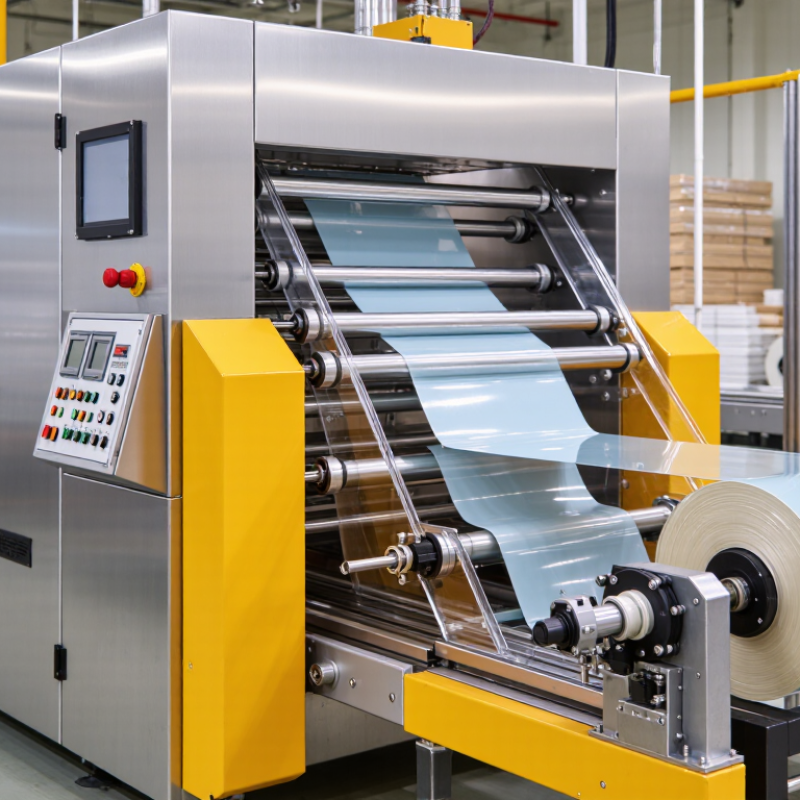
Hot Melt Coating Machines: Process Scope and 100–180°C Operating Windows
Hot melt coating machines support adhesive application on films, foils, papers, fabrics, and specialty laminates. Their process scope depends on viscosity, coating width, line speed, and substrate sensitivity. Operating windows between 100 and 180°C cover many thermoplastic adhesives, but the correct setting is rarely the highest one. Excessive heat can darken adhesive, damage film, or create uneven coating weight.
At 100–130°C, low-viscosity materials may spread smoothly with moderate energy use. Between 130 and 160°C, many production lines achieve a practical balance between flow and stability. Temperatures near 180°C can improve wetting for demanding formulations, yet they also increase thermal stress. Experienced technicians monitor melt temperature, roller temperature, nip pressure, and coating weight together. A stable display reading does not always mean stable application. This is where many evaluations become too optimistic.
Tips: Begin with small temperature increases, usually 5°C at a time. Check peel strength, surface appearance, and coating uniformity after each change. Keep the adhesive in the heated reservoir only as long as necessary. Record actual readings, not assumptions. When comparing the top ten hot melt coating machine manufacturers worldwide, examine temperature control accuracy, cleaning access, material compatibility, and technical support. A machine may look efficient on paper but perform poorly with narrow web materials. That uncomfortable gap deserves careful testing.
Global Top 10 Manufacturers: Comparing 0.5–3.2 m Web Widths
Many global manufacturers now offer hot melt coating machines across 0.5–3.2 m web widths. The narrow 0.5 m class suits pilot lines, specialty labels, and frequent material trials. It uses less adhesive during setup, reducing waste when operators adjust coat weight. Wider systems, from 1.6 to 3.2 m, target high-volume films, foils, nonwovens, and technical laminates. They demand stronger edge control and more stable web tension.
A fair comparison should examine usable width, not the advertised maximum. Measure the coated band beside the trim allowance. Check slot-die or roll-head accuracy at low and high coat weights. A machine may reach 300 meters per minute, yet unstable unwinding can ruin the result. Operators should review temperature zoning, pump response, automatic gauging, splice handling, and cleaning access. These details reveal manufacturing maturity better than a glossy specification sheet.
From practical evaluations, width changes often expose hidden weaknesses. A 0.5 m pilot line can switch materials quickly, while a 3.2 m line rewards long, uninterrupted runs. However, wider equipment is not automatically better. It may require more floor space, heating capacity, and skilled supervision. I would request coated samples from both web edges and the center. Small variations can appear only after cooling. One test is never enough. Comparisons remain imperfect when substrate, adhesive, and operator settings differ. That limitation deserves honest documentation before selecting a global supplier.
Coating Technology Benchmarks: 5–200 g/m² Weights and 300 m/min Speeds
Top 10 Hot Melt Coating Machine Manufacturers Worldwide
Hot melt coating performance is measured in usable production, not brochure claims. A practical benchmark spans 5–200 g/m² coating weights and line speeds approaching 300 m/min. At 5 g/m², nozzle stability becomes critical. At 200 g/m², heat transfer and web tension dominate. Small temperature drift can create visible stripes, edge build-up, or weak bonding.
Smithers’ 2024 flexible packaging market analysis reports continued growth in high-performance films and coated structures through 2029. That demand places pressure on coating equipment to reduce waste during start-up and grade changes. Technical papers published through TAPPI and AIMCAL commonly examine gravimetric control, closed-loop viscosity management, and multi-zone heating. These systems matter when operators move between thin adhesive layers and heavier functional coatings.
A serious manufacturer should demonstrate stable output near 300 m/min, not only a maximum speed on an empty test line. Ask for trial data at 5, 25, 100, and 200 g/m². Check coating uniformity across the full web width. Measure start-up scrap, energy use, and cleaning time. The headline speed is not magic. I would also question results gathered under unusually ideal conditions. Real factories face dust, humidity, changing substrates, and tired operators. A machine that remains predictable under those conditions has greater practical value than one with the highest advertised speed.
Manufacturer Evaluation: Slot-Die Precision, Viscosity Control, and Automation
Top 10 Hot Melt Coating Machine Manufacturers Worldwide
Evaluating hot melt coating machine manufacturers requires more than comparing line speed. Slot-die precision determines coating uniformity, especially with narrow web tolerances. A practical benchmark is die-gap stability within microns, supported by closed-loop pressure and temperature monitoring. Uneven edges often reveal poor shim design or unstable pump control.
Viscosity control is equally important. Hot melt materials can change quickly when temperature drifts by only a few degrees. The American Institute of Chemical Engineers notes that viscosity strongly affects pressure, flow, and film thickness in polymer processing. Therefore, reliable systems should combine heated reservoirs, calibrated sensors, and responsive gear pumps. Grand View Research valued the global hot melt adhesives market at approximately USD 10.7 billion in 2023, with projected growth near 6% annually through 2030. That expansion increases pressure for repeatable production.
Automation should improve judgment, not replace it. Look for recipe management, automatic gap adjustment, web-tension feedback, alarm histories, and traceable batch data. Smithers’ 2024 hot melt adhesives study identifies packaging and hygiene applications as important growth areas, where stable coating quality matters. Yet a highly automated machine can still fail during material changes. I have seen impressive interfaces hide slow cleaning cycles. This is often overlooked. Buyers should request trial runs using their actual viscosity range, substrate, line speed, and shutdown procedure before selecting a manufacturer.
Top 10 Hot Melt Coating Machine Manufacturers Worldwide
Manufacturer Evaluation Framework: Slot-Die Precision, Viscosity Control, and Automation
The chart presents a neutral procurement evaluation model rather than company-specific results. Slot-die precision receives the highest weighting because coating uniformity directly affects product quality, while viscosity control and automation support process stability, repeatability, and production efficiency.
Worldwide Comparison: Substrates, Energy Use, Standards, and Service Coverage
Choosing among the top 10 hot melt coating machine manufacturers requires more than comparing production speed. Substrate handling is critical. Paper, nonwoven fabric, films, foil, and heat-sensitive laminates need different tension control and coating temperatures. A machine designed for 300-metre-per-minute film may damage porous paper through excessive heat. That detail matters.
Energy performance deserves closer inspection. The International Energy Agency’s Energy Efficiency 2023 report states that industry uses about 37% of global final energy. Hot melt systems can reduce drying demand, but heated hoses, tanks, and rollers still consume substantial electricity. Ask for measured kilowatt-hours per coated square metre, not only installed power. Independent trials should include start-up losses, standby time, and cleaning cycles. Some comparisons look impressive. They are incomplete.
Standards and service coverage separate reliable suppliers from fast sellers. ISO 9001 supports documented quality controls, while ISO 50001 provides a framework for energy management. EN 13432 may matter when compostable packaging claims are involved, but coating compatibility still requires testing. The European Commission’s Best Available Techniques documents also encourage measurable resource efficiency and emissions control. Regional service response, spare-parts availability, operator training, and remote diagnostics affect real uptime. A supplier may promise global support, yet a delayed temperature sensor can stop a line for days. That risk is easy to underestimate.