Choosing among China’s top 10 paper bag manufacturers near me requires more than comparing catalog photos. Packaging performance, factory control, material sourcing, and export experience matter equally. A polished sample can still hide weak handles, uneven folds, or poor moisture resistance.
Industry data supports this careful approach. Smithers’ The Future of Sustainable Packaging to 2028 identifies fiber-based packaging as a major growth area, driven by recyclability and plastic-reduction goals. Grand View Research also reports continued expansion in the global paper bags market, supported by food service, retail, and e-commerce demand. These trends create opportunity, but they also increase supplier competition. Not every factory offers the same quality.
This article evaluates leading Chinese manufacturers using practical criteria. These include paper grade, printing accuracy, handle strength, minimum order quantity, certifications, lead time, and communication quality. Reliable suppliers should provide clear technical sheets, factory evidence, pre-production samples, and transparent pricing. FSC chain-of-custody documentation may also matter for buyers with sustainability requirements. However, certification claims need independent verification.
The phrase paper bag manufacturers near me can be misleading. A nearby supplier may reduce communication barriers, while a Chinese factory may offer deeper production capacity and better unit pricing. Freight, customs, and inspection costs can change the final calculation. That part is often underestimated.
There is no perfect ranking. A premium retail bag differs greatly from a takeaway bag or shipping sack. This guide therefore combines published industry research with practical sourcing considerations, while recognizing that supplier performance can change over time.
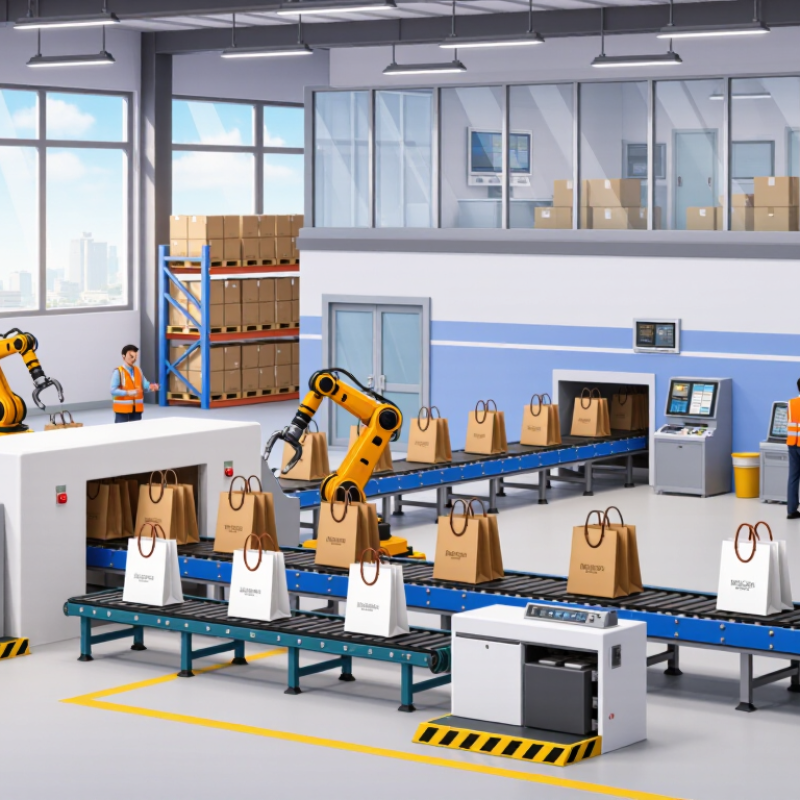
China’s paper-bag industry operates within a large manufacturing base. The China Paper Association reported 129.65 million tonnes of paper and paperboard output in 2023. This figure shows strong material capacity, but it does not prove every factory makes quality bags. Buyers should still check kraft paper strength, handle attachment, printing accuracy, and production consistency.
When searching for a nearby Chinese supplier, compare factories near major ports and packaging clusters. Request recent samples, not only digital photographs. Examine the bag seams, fold lines, paper thickness, and handle comfort by hand. Ask for test data, factory certifications, production lead times, and clear quality-control procedures. A reliable manufacturer should explain its paper source and identify possible defects before mass production. Paper output alone is not enough.
Tips: Confirm the bag size, GSM, coating, handle type, order quantity, and packing method in writing. Request a pre-production sample. One common mistake is choosing the lowest quotation too quickly. A cheaper bag may use weaker paper or thinner handles. I would also allow extra time for revisions; sample approval can expose problems that online discussions hide. “Near me” should mean practical shipping, responsive communication, and dependable inspection support—not simply a short search result.
“Near me” should not mean physical distance alone. For an overseas buyer, it may mean a factory with reliable shipping routes, fast replies, and manageable delivery times. A manufacturer 500 kilometers away may be less convenient than one near a major port. Define your search area by destination, transit time, customs support, and total landed cost. Your warehouse location matters more than a map pin.
A useful ranking system needs measurable evidence. Check paper weight, handle strength, printing accuracy, production capacity, minimum order quantity, and sample quality. Request recent factory photos, material specifications, test records, and a clear production schedule. During sourcing, compare at least three quotations using identical requirements. This prevents cheap prices from hiding weaker paper or higher shipping fees. A short video call can reveal production details, but it cannot replace an audit. That is an easy mistake to make.
Tips: Create a scoring sheet before contacting suppliers. Give each factory points for quality, lead time, communication, compliance, and cost. Ask for one physical sample. Inspect its seams, folds, handles, and surface finish. Keep delivery promises in writing. Reviews help, but verified documents and consistent answers deserve more weight. I would also leave room for uncertainty; supplier information can change, and one inspection is never perfect.
Finding a nearby paper bag manufacturer requires more than checking search rankings. Factory capacity should match your order schedule, not only a sales representative’s promise. Ask for monthly output, active production lines, worker shifts, and recent delivery records. Request dated factory photos or a live video inspection. Capacity claims without evidence deserve caution.
Machinery affects quality and lead time. Verify printing units, cutting equipment, handle-making machines, and inspection tools. Ask whether machines are owned, leased, or outsourced. This detail can change your delivery risk. Confirm the smallest practical MOQ for each size, paper grade, handle style, and printing method. A low MOQ may increase unit cost. I have found that buyers often compare prices too early. The cheaper quote can hide setup charges, manual finishing, or longer production times.
I once treated a clean sample as proof of reliable production. That was too optimistic. Samples can look excellent while later batches show handle failures or inconsistent printing.
China Top 10 Paper Bag Manufacturers Near Me?
When comparing China’s top ten paper bag manufacturers, price should not stand alone. For a standard kraft shopping bag, indicative FOB prices may range from US$0.04 to US$0.18 per piece, depending on paper weight, handles, printing, and order volume. A supplier near a major port may reduce inland transport and handling costs. However, proximity does not always mean faster production. I have seen low quotes hide plate fees, pallet charges, or expensive small-batch setup costs.
Lead times commonly range from 15 to 35 days after artwork approval. Stock paper can shorten production. Custom colors usually add time. Grand View Research estimates the global paper bags market will grow at about 4.4% annually through 2030, increasing pressure on reliable capacity. Smithers also identifies recyclable fiber packaging and retail demand as major growth drivers in its paper packaging outlook. These reports support market growth, but they do not guarantee every factory’s performance.
Location matters for export readiness. Coastal factories in Guangdong, Zhejiang, and Jiangsu often offer easier access to container ports and freight forwarders. Ask for recent export records, carton dimensions, packing photos, and clear Incoterms. Verify FSC or equivalent documentation when required, plus food-contact compliance for relevant applications. A factory may claim “ready to export,” yet lack consistent inspection records. That gap matters. I would compare five recent quotations, request a physical sample, and allow one schedule buffer week. The comparison remains imperfect, but real samples expose more than polished sales sheets.
Anonymized market benchmark comparing indicative FOB pricing, production lead times, and export readiness across major Chinese manufacturing regions.
Prices are indicative USD values per 1,000 standard kraft paper bags. Lead times refer to typical production days after artwork approval. Export-readiness scores range from 1 to 5 and reflect documentation capability, MOQ clarity, and international shipping support. Actual quotations vary by size, paper grade, printing, handles, packaging, and order volume.