10 Best Custom Shopping Bags for Every Occasion?
In today's retail world, custom shopping bags have become essential. These bags not only carry purchases but also promote brands. They reflect personal style and values.
Choosing the right custom shopping bags can be challenging. Each occasion requires a different bag type. For markets, eco-friendly options shine. For weddings, elegant designs make a statement. It’s important to consider material and size.
Many overlook the impact of a well-designed bag. A bag should be practical yet eye-catching. It should encourage reuse. Reflect on your choices; are they functional and stylish? The right custom shopping bag leaves a lasting impression.
Choosing the Right Material for Custom Shopping Bags
When selecting custom shopping bags, the material plays a crucial role. Different materials offer various benefits, affecting functionality and sustainability. According to a report by Grand View Research, the global reusable bags market size was valued at over $4.5 billion in 2021 and continues to grow. Consumers are increasingly aware of environmental impact, driving demand for sustainable materials.
Cotton and jute are popular for their durability and eco-friendliness. These natural fibers break down more easily than synthetic options. However, they may require more care and cleaning. On the other hand, polypropylene bags are lightweight and water-resistant. They provide great printing capabilities but have a longer decomposition rate, raising environmental concerns over time.
**Tip:** Always assess the lifecycle of your chosen material. Consider how long you’ll use the bag before disposal. This might influence your choice. Stretchable materials can withstand wear but can also limit printing styles. Keep in mind that a bag's design must fit its use. If it’s frequently exposed to heavy items, sturdier materials are essential. Remember, the right choice reflects your brand’s values and commitment to sustainability.
10 Best Custom Shopping Bags for Every Occasion
| Bag Type |
Material |
Durability |
Eco-Friendliness |
Best Use |
| Tote Bag |
Cotton |
High |
Yes |
Grocery Shopping |
| Drawstring Bag |
Polyester |
Medium |
No |
Sports Events |
| Reusable Shopping Bag |
Non-woven fabric |
High |
Yes |
Daily Shopping |
| Paper Bag |
Kraft Paper |
Medium |
Yes |
Gift Giving |
| Insulated Bag |
Foil & Fabric |
High |
Yes |
Food Delivery |
| Eco-Friendly Bag |
Jute |
High |
Yes |
Market Shopping |
| Foldable Bag |
Nylon |
Medium |
Yes |
Travel |
| Luxury Bag |
Leather |
High |
No |
Special Events |
| Mesh Bag |
Mesh Fabric |
Medium |
Yes |
Outdoor Activities |
| Sustainable Bag |
Recycled Material |
High |
Yes |
General Use |
Popular Customization Options for Shopping Bags
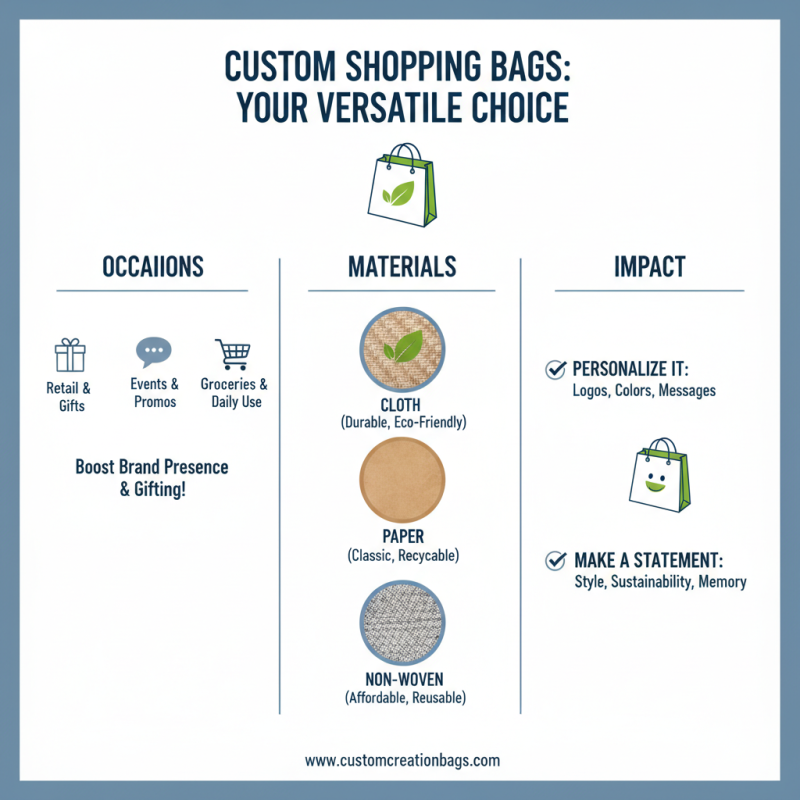
Custom shopping bags are versatile tools for various occasions. Personalizing them can make a significant impact. You can choose materials like cloth, paper, or non-woven fabrics. Each material offers different benefits. For instance, cloth bags are durable and eco-friendly. Meanwhile, paper bags can provide a classic look.
Colors play a crucial role in customization. Bright colors can catch the eye, while pastels provide a softer vibe. Select patterns or images that reflect your brand or personality. A graphic logo or a fun quote can turn a simple bag into a conversation starter.
Tips: Consider the bag size carefully. A too-small bag limits what you can carry. A bag that's too large may be cumbersome. Think about the audience. Different occasions call for different styles. Keep usability in mind. Not all designs are practical. A bag should be functional and stylish. Remember, form and function are equally important.
Top 10 Custom Shopping Bags for Eco-Friendly Shoppers
When it comes to eco-friendly shopping, custom bags are a great choice. These bags are not only practical but also stylish. Many options are available, making it easy to find the perfect fit for every occasion. From vibrant colors to unique patterns, you can showcase your personality while being environmentally conscious.
Choosing the right materials is essential. Look for bags made from organic cotton or recycled materials. Natural fibers can be durable and promote sustainability. Plastic may seem convenient, but it harms the environment. Remember, not all bags are created equal. Take time to explore different options.
Tips: Always consider the bag's lifespan. A sturdy bag is more cost-effective in the long run. Also, think about the size you need. A small bag may not fit all your groceries. Design plays a role, too. A simple bag might not be as eye-catching, but it can be versatile.
Reflect on your daily needs and make a thoughtful choice. These custom bags can make a significant impact on reducing waste.
Designing Custom Shopping Bags for Events and Promotions
Designing custom shopping bags for events and promotions can elevate your brand’s presence and engage customers. Research shows that 70% of consumers remember brands on shopping bags. With eye-catching designs, bags turn into mobile advertisements. They offer repeated exposure, as bags are reused and not easily discarded.
When creating a bag, think about its practicality. A bag should not only look good but also be functional. Consider the size and material. Eco-friendly materials are increasingly in demand, with 50% of consumers favoring sustainable options. Yet, some designs may compromise durability for style. Aim for a balance to avoid disappointing customers.
Tips for designing effective custom bags: focus on clear branding elements and colors that align with your company identity. Use concise messaging for maximum impact. Ensure that your logo is visible and readable. It's vital to test different designs with your audience. Sometimes, what looks good might not resonate well. Be ready to iterate based on feedback and trends to ensure your bags truly serve their purpose.
Practical Tips for Maintaining Your Custom Shopping Bags
Maintaining custom shopping bags is essential for their longevity. First, clean them regularly. Use mild soap and water. Avoid harsh chemicals. If your bag gets stained, treat it immediately. A quick response can prevent permanent marks. Sometimes, despite care, bags can develop wear and tear. That’s just a part of life.
Next, proper storage matters. Don't crush or fold your bags too tightly. Keep them in a cool, dry place. Over time, poor storage can affect the material. Sometimes, I notice my bags lose shape. That’s frustrating. Also, look out for stitched seams. They can fray if not checked. It's easy to neglect this, but less maintenance increases the chance of damage.
Lastly, remember to use your bags frequently. They are designed for various occasions, from grocery trips to events. Each use helps maintain their shape. But be cautious. Overloading a bag can lead to tears. So, appreciate their purpose but also respect their limits. Balancing use and care is tricky but vital.